​​What to Know About Alcohol and Kidney Damage

Help Is Here

Don’t wait for tomorrow to start the journey of recovery. Make that call today and take back control of your life!

"*" indicates required fields

Understanding the risks, signs, and treatment options available in Southern California

How Alcohol Affects Kidney Function

Your kidneys do more than just filter waste—they regulate blood pressure, maintain fluid balance, and support healthy bones and red blood cell production. When alcohol is introduced into the body, especially in large or frequent amounts, it can disrupt these functions in several ways:

Dehydration – Alcohol is a diuretic, which means it makes your body lose more fluids than it takes in, forcing the kidneys to work harder.

Electrolyte Imbalance – Losing fluids also means losing key minerals like sodium, potassium, and magnesium—leading to fatigue and muscle weakness.

Increased Blood Pressure – Heavy drinking contributes to hypertension, one of the leading causes of chronic kidney disease (CKD).

Impaired Filtration – Alcohol puts stress on the kidneys’ filtration system, making it harder to remove toxins from your bloodstream.
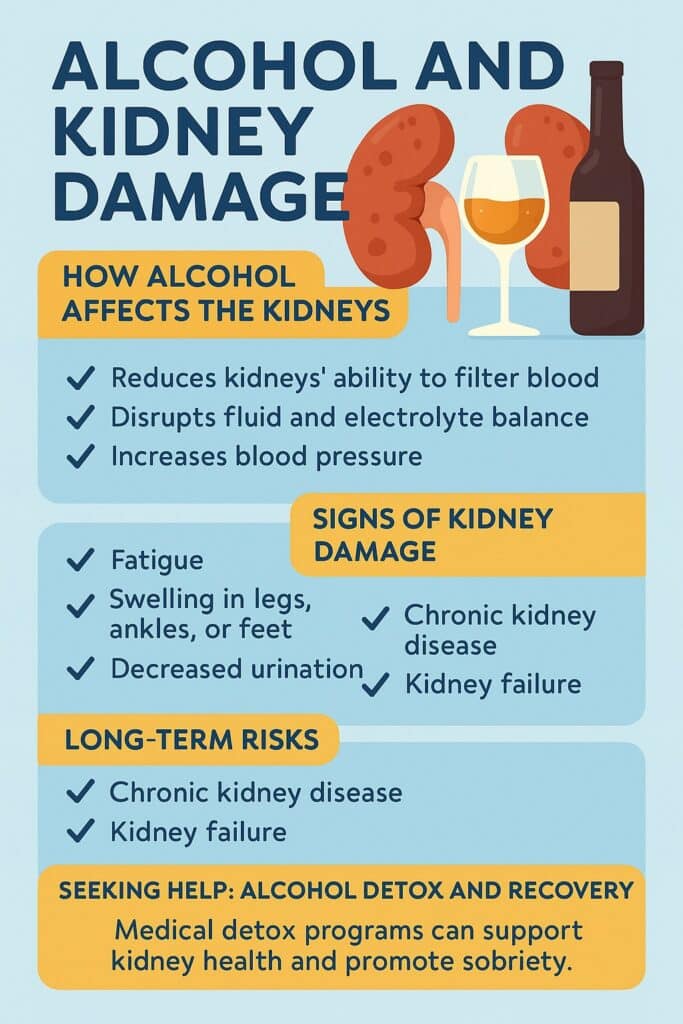
Coastal Detox - Alcohol and kidney damage infographic

Short-Term Effects of Alcohol on the Kidneys

Even occasional binge drinking can temporarily harm your kidneys. Signs of kidney damage from alcohol include:

  • Back or flank pain
  • Reduced urination or dark-colored urine
  • Dizziness or fatigue due to fluid loss
  • Headaches from electrolyte imbalance
  • Increased thirst or dry mouth

In some cases, binge drinking may lead to acute kidney injury (AKI), which is a sudden loss of kidney function that can become permanent without treatment.

Can Alcohol Cause Kidney Failure?

Yes—long-term heavy drinking can increase the risk of kidney failure.

One study shows that up to 1 in 3 people with alcohol use disorder experience reduced kidney function compared to the general population.

Here’s how alcohol may contribute to kidney disease and eventual failure:

  • High Blood Pressure: A major risk factor for kidney damage, worsened by chronic alcohol use.
  • Liver Disease: Alcohol-related liver dysfunction can lead to hepatorenal syndrome, a serious condition where the kidneys fail due to liver complications.
  • Chronic Dehydration: Continually stressing the kidneys with insufficient hydration and overexertion.

While liver damage gets most of the spotlight, alcohol’s silent impact on kidney health is just as serious—and often overlooked.

Signs of Kidney Damage from Alcohol

Alcohol-related kidney damage often develops gradually. Symptoms you shouldn’t ignore include:

  • Swelling in the feet, hands, or face
  • Frequent or reduced urination
  • Foamy or dark-colored urine
  • High blood pressure
  • Persistent fatigue or brain fog
  • Lower back or side pain
  • Nausea or shortness of breath

If you recognize these symptoms in yourself or someone else, it’s important to seek medical support immediately.

🧠 Want to learn more? Read our post: Recognizing the Signs of Substance Abuse

Can the Kidneys Heal After You Quit Drinking?

The good news is that mild to moderate kidney damage caused by alcohol can often improve once alcohol use stops. However, if the damage is advanced or combined with other conditions, full recovery may not be possible.

Factors that influence kidney healing:

  • Duration of alcohol use
  • Presence of liver damage
  • Blood pressure control
  • Hydration and nutrition habits
  • Early intervention through medical detox

Quitting alcohol and seeking support through a medical detox program for alcohol increases your chances of recovery and long-term kidney protection.

Read more: How to Bounce Back Stronger in Addiction Recovery

Protecting Your Kidney Health While Drinking

If you currently drink alcohol and want to reduce your risk of kidney issues:

  • Limit alcohol to one drink per day for women or two for men
  • Stay hydrated—alternate alcoholic drinks with water
  • Get regular blood pressure and kidney function tests
  • Follow a kidney-friendly diet rich in whole foods and low in sodium
  • Practice stress reduction, sleep hygiene, and physical activity

Still, the safest choice for your kidneys is abstinence, especially if you already have other health concerns.

Detoxing Safely at Coastal Detox in Southern California

At Coastal Detox SC, we specialize in helping clients safely withdraw from alcohol in a medically supervised, supportive environment. This is especially important if you’re concerned about kidney and liver health.

Our services include:

  • 24/7 clinical and medical monitoring
  • Medication-assisted detox for comfort and safety
  • Personalized treatment plans
  • Dual diagnosis support for underlying mental health issues
  • Nutritional therapy, hydration support, and post-detox planning
  • You’re in the right place. We’re here to help you heal safely and holistically.

At our San Diego-area detox center, we provide medically supervised alcohol detox that supports kidney and liver health for clients throughout Orange County, Los Angeles, and all of Southern California.

Read more: Evidence-Based Detox Approaches That Guide Sobriety

Learn more about our Alcohol Detox in San Diego

More To Explore

April is Alcohol Awareness Month in San Diego

April is Alcohol Awareness Month: Understanding and Acting in San Diego

April marks Alcohol Awareness Month, an annual public health observance dedicated to raising awareness about alcohol-related issues, promoting responsible choices, and encouraging

12-step meditation to find your Higher Power

Healthy vs Unhealthy Coping Mechanisms in Addiction Recovery

Addiction recovery is not just about quitting drugs or alcohol; it’s about learning a completely new way to live and manage life’s

addiction intervention services

Are Addiction Interventions Effective? A Guide for Families

When a loved one is struggling with addiction, the pain and frustration can feel overwhelming. You might feel helpless, unsure of the

Meet Our Team

Coastal Detox of Southern California is composed of an entire team of highly trained substance abuse professionals in recovery.
phil castagnola surdrc program director

Phil Castagnola, SUDRC

Program Director

kay saffe lpcc clinical director

Kay Saffe, LPCC

Clinical Director

jeff swem sudrc director of operations

Jeff Swem, SUDRC

Director of Operations

Coastal Detox of Southern California is only a call away.

Contact Us Today for a Free Confidential Assessment and Insurance Verification.

​​What to Know About Alcohol and Kidney Damage

Phil Castagnola

Case Manager

Philip was born and raised in San Diego. He grew up with parents who were functioning alcoholics /addicts. This led to adopting a faulty belief system from a very early age that using drugs and alcohol was an acceptable way to live. The belief system made it normal for him to begin using substances at the age of 15.
Philip has been a surfer his entire life and competed professionally for a few years in his 20’s. He has primarily worked in the surf industry. He eventually opened his own surf shop (Select Surf Shop) in the early 2000’s. His addiction eventually got the better of him and after losing his business and his family in 2006 he spent the next 3 years in and out of rehabs trying to recover. His substance abuse issues eventually landed him in federal prison. He used his time wisely and started working the steps of alcoholics anonymous and completing an 18-month treatment program. 
Philip was the primary caregiver for his mom who was permanently bedridden for the last 4 years. When covid hit he decided to pursue one of his goals and began going to school to become a substance abuse counselor.

After struggling with substance abuse issues for over 20 years philip now has 1 years of continuous sobriety and works a program of recovery givi4ng back to other addicts and alcoholics through sponsorship in the program of AA.

Philip studied AODS at San Diego City College and he is now completing his internship here at Coastal Detox of Southern California.

Philip’s main passion is sharing his experience, strength and hope with others who struggle with substance abuse issues. Helping others through their journey of getting and remaining free of their bondage of addiction.

Kay Saffe LPCC

Clinical Director

Kay Saffe grew up in Miami, Florida and is a first generation American with Argentinian roots. She struggled with drinking and substances, especially throughout her youth. Today, she has been in recovery for years and strives to prioritize her spiritual, mental, and physical health.

A lifelong athlete and ocean lover, she moved to San Diego to pursue a Master’s degree in counseling at the University of San Diego and progress her surfing. She has spent years working as a surf instructor and therapist, working with local non-profits that treat at risk individuals and families in English and Spanish. She incorporates a mindful and holistic approach to therapy. She is passionate about positive psychology and helping others through their recovery journey.

Jeff Swem, SUDRC

Director of Operations

Jeff was born and raised in San Diego, and spent much of his youth living blocks from where our residential housing is located.  He spent his teenage years skateboarding up and down the surrounding streets, and enjoying the Pacific Beach life in the 80’s/early 90’s. 

Jeff got to know the darker side of addiction early in life, with three near-death experiences in a row happening within a year.  He “settled down” into alcohol, and later in life became a professional brewer, but that too proved to be too cunning, baffling, and powerful a draw.  During Covid, he felt no choice but to surrender, and made the decision to get sober.  He attended a similar program to our own, and after completing the 30 days inpatient and attending IOP aftercare, he was able to forge a strong foundation of sobriety.  He has not found a reason to pick up a drink since the day that he checked into that detox.  After quitting the brewing gig (because of course, he had little choice there), he enrolled in the AODS program at City College with his sights on a new career of helping others.  Having completed the requirements involved, he went on to earn his certification in California for Substance Use Disorder Certified Counselor.

Jeff is married to his wife of nearly 25 years with a 21 year old daughter and 18 year old son, and thanks to the 12 steps, surrounding himself with a caring and supportive sober community, and coming to terms with his alcoholism, is able to lead others struggling with addiction through example and personal experience.