Heroin detox is the first step in treating heroin addiction, and it’s important to navigate this period with medical supervision. Heroin withdrawal symptoms and intense cravings can be overwhelming, making it difficult to stop using on your own. Attempting to quit without professional support can lead to significant physical and emotional distress, and greatly increases the risk of a relapse.
At Coastal Detox, we provide a safe, compassionate environment for heroin detox in San Diego, ensuring you don’t have to face this challenge alone. Our medically supervised facility offers 24/7 monitoring and individualized withdrawal management tailored to your specific needs. When clinically appropriate, we utilize evidence-based medications for opioid use disorder (MOUD) to ease discomfort and support long-term success.
Within our supportive residential environment, our dedicated team is committed to your safety and comfort, facilitating a seamless transition into continued addiction treatment for lasting sobriety. You deserve a life free from dependency, and we are here to help you achieve it.
Get Confidential Help | Verify Insurance
Coastal Detox offers a clinical approach to medical heroin detox that prioritizes patient safety and long-term recovery. Our program begins with a comprehensive medical and mental-health assessment to understand the specific needs of each individual. This evaluation allows our team to develop individualized treatment plans that address both the physical aspects of heroin withdrawal and any underlying co-occurring mental health conditions.
Our facility provides 24/7 nursing and clinical monitoring within a residential setting, ensuring that patients are supported throughout the entire detoxification process. We utilize medically supervised withdrawal management and, when clinically appropriate, provide evidence-based medications to manage symptoms and reduce cravings. To support lasting sobriety, our team focuses on detailed transition planning, helping patients navigate the next steps of their treatment journey after detox is complete.
Heroin is a highly potent, illicit opioid derived from morphine. When used, it rapidly binds to and activates opioid receptors in the brain, triggering a surge of dopamine that reinforces drug-seeking behavior. Because of how it impacts brain chemistry, repeated use of heroin frequently leads to the development of physical tolerance—needing more of the drug to achieve the same effect—and physical dependence.
While dependence and opioid use disorder (OUD) are related, they are distinct: dependence refers to the body’s physical adaptation to the presence of the drug, whereas OUD is a complex medical condition characterized by a loss of control over use despite negative consequences. Heroin appears in various forms, most commonly as a white or brown powder or as a sticky, dark substance known as black tar heroin. Regardless of the form, professional medical intervention is the safest way to address the risks associated with this substance.
Today, it is increasingly common for illicit heroin to be cut with fentanyl or other synthetic opioids. Because of this, many people may not know exactly what is in the substance they are using, which significantly increases the risk of overdose and can complicate the withdrawal process.
At Coastal Detox, we understand these risks and provide dedicated care for both fentanyl detox and broader opioid detox services to ensure our clients receive the appropriate medical support for their specific needs.
Recognizing the signs of heroin addiction in yourself or a loved one can be difficult, but identifying these indicators is an essential step toward seeking help. While substance use affects everyone differently, understanding common behavioral and physical markers can help clarify when professional support is needed.
While individual experiences vary, some common signs of heroin use include:
If you or a loved one is struggling with heroin use, recognizing when it’s time for professional support is a vital step toward recovery. Signs that it may be time to seek treatment include:
While heroin withdrawal is generally not medically equivalent to alcohol or benzodiazepine withdrawal regarding the risk of seizures or delirium tremens, it is intensely uncomfortable and often creates a powerful drive to use again. This intense physical and emotional distress makes professional support essential for a safe and successful recovery.
It is vital to distinguish between the extreme discomfort of withdrawal and the life-threatening medical emergency of an overdose. Overdose is an emergency requiring immediate medical intervention. People who have recently used heroin—particularly when there is a risk of fentanyl exposure—may be at risk for respiratory depression, which can be fatal. If you suspect an overdose, call emergency services immediately.
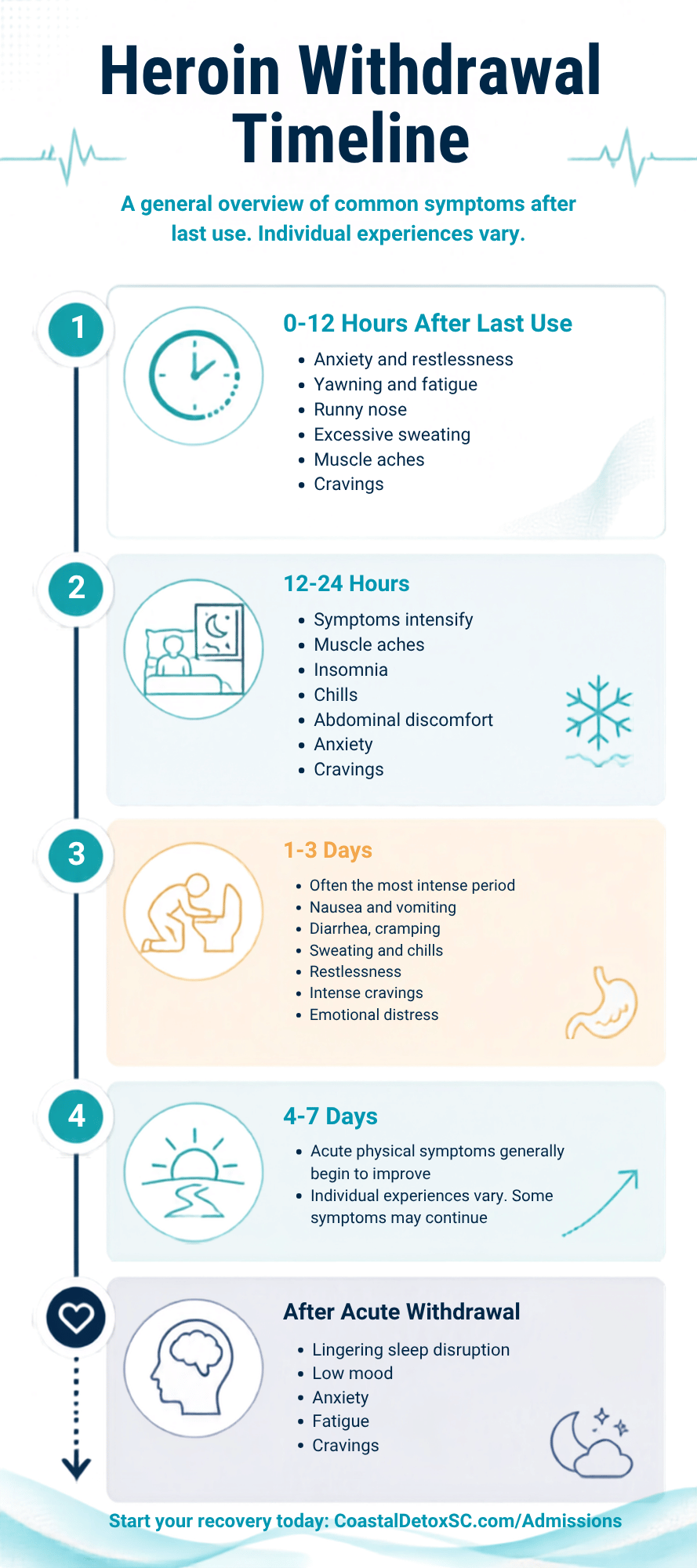
The duration and intensity of withdrawal symptoms can vary significantly based on factors like the length and severity of use, individual physiology, and the presence of other substances.
Acute physical symptoms generally begin to improve, though individual experiences will continue to vary.
Recovery from heroin addiction is a personal experience, and there is no single, fixed duration for the withdrawal process. While general timelines exist, the length and intensity of withdrawal vary significantly from person to person. Understanding the factors that influence this timeline can help you prepare for heroin detox with patience and self-compassion.
It is also important to distinguish between the different phases of recovery. Acute withdrawal is the initial, intense physical phase where the body begins to clear the substance. Following this, some people experience post-acute withdrawal symptoms (PAWS), which are lingering emotional or physical issues like anxiety or sleep disruption that can persist for weeks or months.
Ultimately, these phases are steps in the long-term recovery process—a continuous journey toward wellness and stability where professional support makes a lasting difference. Several key factors contribute to the duration and severity of heroin withdrawal symptoms:
While it is physically possible for some people to stop using heroin outside of a treatment facility, attempting to detox on your own is extremely challenging and carries significant risks. The intensity of heroin cravings can create a powerful drive to use again, often leading to relapse before the acute withdrawal phase has even passed.
Medical evaluation and professional supervision are particularly critical if you are navigating polysubstance use, underlying medical conditions, pregnancy, mental health concerns, or potential fentanyl exposure. These factors require specialized attention to ensure your safety and comfort.
Choosing professional detox offers significant advantages, including:
At Coastal Detox, we understand that managing withdrawal symptoms is a critical part of the recovery process. While not everyone will require the same approach, medications can often play a vital role in easing discomfort, reducing cravings, and supporting stability.
All medication decisions are made following a thorough clinical assessment and are tailored to your specific health needs.Our goal is to ensure you are as safe and comfortable as possible throughout your time with us, providing targeted care that supports both your physical wellbeing and your path to recovery.
Buprenorphine is a partial opioid agonist that can be used to help manage the symptoms of opioid withdrawal and reduce cravings. When clinically appropriate, it serves as an important component in the treatment of opioid use disorder. Because everyone’s physiology is different, the use of buprenorphine must be initiated according to an individualized clinical plan developed by our medical team.
Suboxone is a combination medication containing both buprenorphine and naloxone. It is commonly prescribed to help stabilize the physical body, reduce cravings, and ease withdrawal symptoms during the detox and treatment process. By combining the therapeutic effects of buprenorphine with the protective properties of naloxone, it can be an effective component of a comprehensive opioid use disorder treatment plan. As with all medications, its use is determined by our medical team based on a thorough, individualized clinical assessment to ensure it is appropriate for your specific needs.
Naltrexone is an opioid antagonist, meaning it works by blocking the effects of opioids in the brain. It is not used during the acute detox phase because it requires an adequate opioid-free period before initiation to avoid precipitated withdrawal. Naltrexone may be considered as part of your ongoing, post-detox treatment strategy to assist in relapse prevention.
Beyond medications specifically targeting opioid dependence, we provide supportive care to help you manage the physical and psychological symptoms of withdrawal. Depending on your clinical needs, our medical team may utilize various medications to address:
Every journey begins with a comprehensive evaluation to ensure our care is safe and effective. Our team conducts a thorough medical and mental health assessment, which includes discussing your substance-use history, the time of your last heroin use, and any use of other substances. We also review your medical history, current medications, and any previous experiences with withdrawal to help us understand your unique clinical needs.
There is no one-size-fits-all approach to detox. Based on your assessment, our medical team develops a tailored plan that accounts for your specific withdrawal risk, substance-use patterns, and overall clinical needs. This individualized roadmap ensures that your care is focused, appropriate, and responsive to your body’s specific requirements.
Safety is our primary concern throughout the detox process. Our nursing and clinical team provides around-the-clock monitoring to keep you safe and stable. This includes regular checks of your vital signs, consistent tracking of withdrawal symptoms, and monitoring your response to any medications. We are vigilant in observing changes in your physical and mental status, allowing us to adjust your care plan in real-time.


We utilize a combination of clinical interventions to keep you comfortable. This includes, when clinically appropriate, evidence-based medications for opioid use disorder, as well as comfort medications to address specific symptoms. Our supportive nursing staff ensures you stay hydrated and nourished while prioritizing rest and stabilization to help your body heal during this challenging time.
Once you are medically stable, we begin integrating supportive programming into your schedule. This includes individual support sessions, group programming, and dedicated mental health care. You will have the opportunity to begin learning essential coping skills and engage in recovery education, helping you build a foundation of knowledge and resilience.
Detox is a crucial first step, but it is just the beginning of your recovery journey. After detox, we help transition you to our residential rehab program, which we offer in the same location as our detox services. This ensures a seamless path from detox to rehab, ensuring you have the support and resources needed to maintain your progress and pursue long-term sobriety.
Attempting to stop using heroin on your own is an incredibly difficult challenge, and if you have tried before and relapsed, that doesn’t mean you failed. It simply highlights the physical complexity of heroin dependence. The following comparison illustrates why professional support can make a significant difference in your safety, comfort, and long-term success.
It is common for people struggling with heroin use to also use other substances, a situation often referred to as polysubstance use. Commonly co-abused substances include:
This is a critical factor in your detox process because each substance carries its own unique withdrawal risks and physiological effects. Combining multiple substances can significantly complicate the medical assessment, as the interaction between different drugs—such as stimulants and depressants—can alter your immediate medical needs and withdrawal trajectory.
For your safety, it is essential to be completely open with our treatment team about everything you are using. Our medical staff needs an accurate, comprehensive picture of the substances in your system to safely manage your detox and prevent complications. We are here to support you without judgment. Full transparency allows us to provide the most effective, safe, and individualized care for your specific situation.
Detox is a crucial first step, but it is not the complete recovery process. Transitioning from detox into continued care is essential for building long-term, sustainable sobriety. At Coastal Detox, we view the post-detox phase as an opportunity to address the deeper roots of addiction and build a new foundation for life.
Following detox, residential treatment allows you to step away from your daily environment and focus entirely on recovery. This level of care is designed to help you identify and address the underlying causes, habits, and behaviors that contributed to substance use. In a structured, therapeutic setting, you will begin to dismantle old patterns and replace them with healthy coping mechanisms, supported by our multidisciplinary team.
Recovery looks different for everyone. When clinically appropriate, we offer the continuation of medication for opioid use disorder (MOUD) after detox. This approach is not a permanent solution, but a tool to support your stability as you engage in therapy and life-skills development. By managing physiological cravings and withdrawal symptoms, MOUD can provide the steady ground needed to fully engage in your treatment program and reduce the risk of relapse.
Deep healing requires addressing both addiction and any co-occurring mental health challenges. Our approach integrates a variety of therapeutic modalities to ensure you receive comprehensive support:
Sustainable recovery relies on a strong safety net. Before you complete your stay with us, we work with you to develop a comprehensive aftercare plan tailored to your future needs. This may include:
At Coastal Detox, we understand that choosing a detox program is a significant decision. Located in the heart of San Diego near Pacific Beach, our residential facility provides a safe, discreet environment where you can focus entirely on your recovery. Our licensed medical and clinical team is dedicated to providing 24/7 medical supervision and compassionate, high-quality care, ensuring your comfort and safety every step of the way.


You don’t have to wait to ask for help.
Coastal Detox provides medically supervised heroin detox in a safe residential setting, with 24/7 clinical support and individualized withdrawal management.
You deserve the support necessary to reclaim your life—reach out to our team today to begin your journey toward lasting recovery.
Heroin detox is the essential first phase of recovery, designed to help you safely and comfortably stop using heroin under professional medical supervision. Because heroin withdrawal can be physically intense and often triggers powerful cravings that make quitting on your own extremely difficult, this process provides 24/7 clinical monitoring and individualized withdrawal management to ensure safety and stability throughout the detoxification period.
By utilizing evidence-based medical support—and when clinically appropriate, medications to alleviate withdrawal symptoms—a professional detox program helps patients navigate the most challenging physical hurdles of early recovery. Ultimately, this controlled, supportive setting lays a stable foundation for the next steps in addiction treatment, guiding the individual toward sustainable long-term recovery.
While there is no single, fixed duration for heroin detox, the acute phase of withdrawal—where the most intense physical symptoms occur—commonly lasts between 4 and 7 days. During this time, the body is actively clearing the substance, and you may experience the most significant physical discomfort as your system begins to stabilize.
However, it is important to remember that individual experiences vary significantly based on factors like the length and severity of use, individual physiology, and the presence of other substances. Some lingering symptoms, such as anxiety, sleep disruption, or cravings, can persist beyond the initial acute phase. Because every person’s path to recovery is unique, our medical team continuously monitors your progress and adjusts your care plan to ensure you remain as comfortable and safe as possible throughout the entire process.
Heroin withdrawal causes a range of physical and psychological symptoms as the body adjusts to the absence of the substance. These symptoms can be deeply uncomfortable and often include significant gastrointestinal distress, intense aches, and emotional agitation. Because these symptoms can be overwhelming and contribute to a powerful drive to use again, medical supervision is vital for managing discomfort and ensuring safety during the detox process.
Common symptoms include:
While heroin withdrawal is generally not considered medically life-threatening in the same way that alcohol or benzodiazepine withdrawal can be (due to the risk of seizures or delirium tremens), it is intensely uncomfortable and can lead to serious medical complications if not managed properly. The extreme physical distress, including severe dehydration from vomiting and diarrhea or the risk of aspiration, requires careful clinical oversight.
It’s vital to distinguish between withdrawal and an overdose. An overdose is a life-threatening medical emergency involving respiratory depression that requires immediate intervention, particularly if fentanyl exposure is involved.
Withdrawal risks increase significantly when polysubstance use is involved, such as combining heroin with alcohol, benzodiazepines, or stimulants. These combinations can complicate your medical assessment and escalate the potential for dangerous physiological reactions. Because of these factors, attempting to detox without professional support carries significant risks, including a powerful drive to relapse. Choosing a medically supervised detox program ensures that you are monitored 24/7, allowing our team to manage discomfort, provide immediate support for any medical complications, and ensure your safety throughout the process.
Yes, medications can play a crucial role in safely managing heroin withdrawal and supporting long-term recovery. When clinically appropriate, medications for opioid use disorder (MOUD)—such as buprenorphine—are used to significantly ease the physical symptoms of withdrawal and reduce the intensity of cravings. These treatments help patients feel more comfortable, which can make it easier to remain focused on the recovery process rather than struggling against overwhelming urges to use.
Beyond buprenorphine, our medical team may utilize various evidence-based medications tailored to your specific needs. This might include comfort medications designed to address issues like nausea, insomnia, muscle aches, or anxiety. The goal of medication-assisted care is not just to get through the detox phase, but to provide a stable foundation for ongoing treatment and therapy. All medication plans are initiated based on a comprehensive, individualized assessment to ensure they align with your health history and recovery goals.
Yes, it is possible and actually common to detox from heroin and fentanyl simultaneously. Given that much of the illicit heroin supply is frequently contaminated with fentanyl or other synthetic opioids, many people seeking help for heroin addiction are physically dependent on both substances. Because both drugs are opioids that act on the same receptors in the brain, they are typically managed together within a single, comprehensive medical detox protocol rather than as separate processes.
However, professional medical supervision is essential when both substances are involved. Fentanyl is significantly more potent than heroin, which can complicate the timing of medication-assisted treatment—such as the induction of buprenorphine—to avoid the risk of precipitated withdrawal. Our medical team continuously monitors your physiological response to ensure your safety, adjusting your care in real-time to manage the specific challenges posed by a combined dependence on these powerful opioids.
Detox is a crucial first step, but it is not the complete recovery process. Transitioning from detox into continued care is essential for building long-term, sustainable sobriety, as it allows you to address the deeper psychological and behavioral roots of addiction in a structured, supportive environment.
After detox, many patients transition into residential addiction treatment, where they can focus entirely on recovery through evidence-based therapies, dual-diagnosis support for co-occurring mental health conditions, and individualized aftercare planning. This continuum of care—which may include outpatient programs, ongoing medication management, and relapse-prevention strategies—provides the safety net and clinical guidance necessary to navigate the complexities of long-term recovery.
Yes, Coastal Detox accepts most major PPO health insurance plans to cover heroin detox and residential treatment. We work with many leading providers, including Aetna, Anthem, Blue Cross Blue Shield, Cigna, Health Net, and UMR. Because every insurance policy is unique, your specific coverage—including deductibles, copays, and network status—will depend on the terms of your individual health plan.
To make this process as seamless as possible, our admissions team handles the verification of your benefits directly with your insurance provider on your behalf. You can verify your insurance benefits online or call us at 858-333-7396 for a confidential, no-obligation assessment. We are dedicated to providing transparency about your coverage and out-of-pocket costs before you commit to treatment, so you can focus entirely on your recovery journey.

Kay Saffe, LPCC, is a Licensed Professional Clinical Counselor and Clinical Director at Coastal Detox of Southern California. She holds a Master’s Degree in Clinical Mental Health Counseling from the University of San Diego and a Bachelor’s Degree in Psychology from New College of Florida. She has been in recovery for over 4 years and is passionate about using positive psychology to help others through their own recovery journey. Outside of Coastal Detox, Kay also works as a surf instructor and volunteers with local San Diego non-profits to help treat at-risk individuals in both English and Spanish. Originally from Miami, Florida, Kay is a first-generation American with Argentinian heritage.
Contact Us Today for a Free Confidential Assessment and Insurance Verification.
"*" indicates required fields